Stop Trying to Be Everywhere: Build a Digital Presence That Actually Works
Why businesses need a connected online strategy instead of more accounts, more posts, and more platforms.
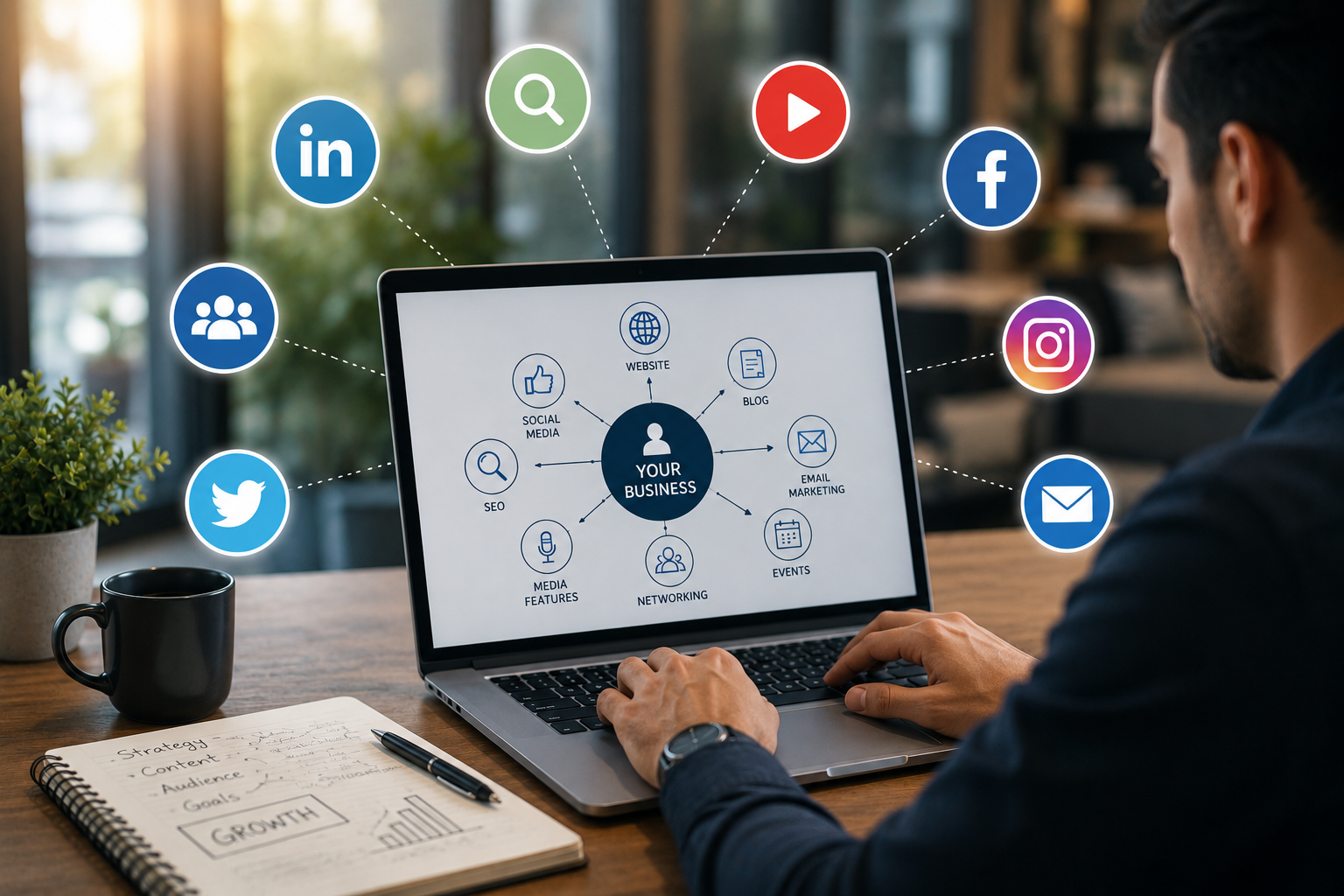
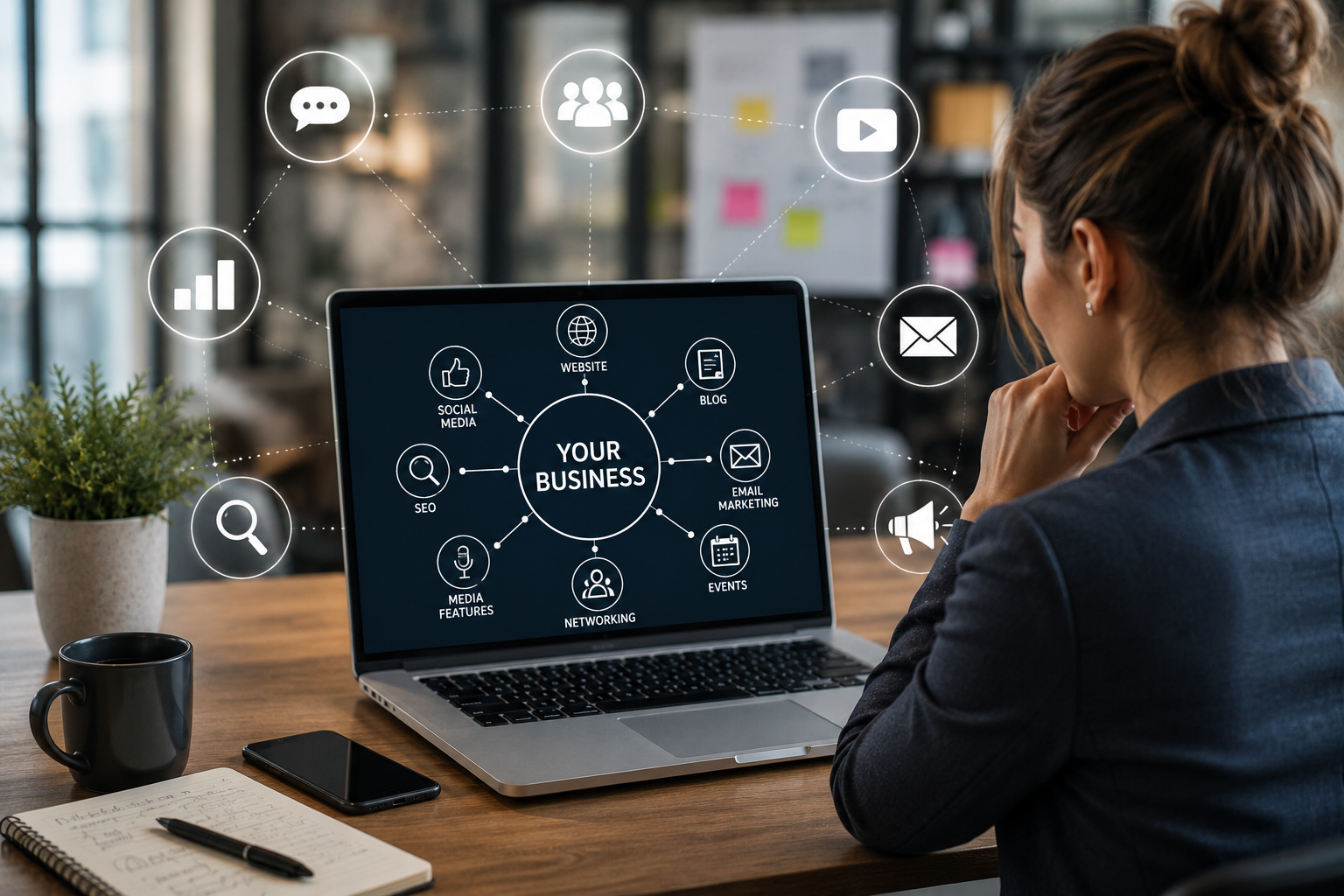
Stop Trying to Be Everywhere: Build a Digital Presence That Actually Works There is a common belief in modern business that growth requires being everywhere. Businesses are told they need to post every day, create videos, start a podcast, write blogs, send emails, build a website, join every social platform, attend events, run advertisements, get press coverage, and constantly produce something new. The result is often not better marketing. It is exhaustion. Business owners find themselves managing multiple platforms without understanding which ones are actually helping them grow. Content gets created simply because something needs to be posted. Websites are built and rarely updated. Social media accounts accumulate followers who never become customers. Valuable interviews, articles, and event appearances are shared once and then forgotten. The problem is not necessarily that businesses need more marketing. In many cases, they need the pieces they already have to work together. Your Digital Presence Should Have a Purpose Every part of your online presence should serve a purpose. Your website should help people understand who you are, what you offer, and what they should do next. Your social media should keep you visible and allow people to engage with your brand. Your blogs should demonstrate expertise and help you become discoverable through search. Your media appearances should build credibility. Your business profiles should make it easier for people to find and understand you. When each platform has a role, your digital presence becomes easier to manage because you are no longer publishing simply for the sake of publishing. This also changes how you measure success. A social media post does not need thousands of likes if it reaches the right potential customer. A blog does not need to go viral if it consistently brings relevant people to your business. An interview does not need millions of viewers if the people who watch it develop greater trust in you. The goal is not maximum activity. The goal is meaningful activity. Your Website Should Be the Center, Not an Afterthought Social platforms are useful, but businesses do not control them. Algorithms change, features disappear, accounts can lose reach, and audiences move between platforms. Your website gives you a place to bring everything together. Someone who discovers you through an event, social media post, interview, referral, or article should be able to visit your website and quickly understand your business. They should not have to search through dozens of posts to figure out what you actually do. A strong website can showcase your services, expertise, media appearances, articles, accomplishments, events, testimonials, and ways to contact or work with you. It becomes the destination that supports everything else you are doing. That is why a beautiful website alone is not enough. The website needs to be connected to a larger strategy that actually sends people there. Social Media Is a Doorway, Not the Entire Building Social media is one of the easiest ways to communicate with an audience, but businesses sometimes treat it as their entire online presence. That can create problems. A potential customer may see a short video and become interested in your company, but they may want more information before contacting you. They might search your name, visit your website, read an article, watch an interview, look for reviews, or research your background. Each additional piece of information can either strengthen or weaken the impression created by that first social media interaction. This is why social media works best when it leads somewhere. A post can lead to an article. An article can lead to your business profile. A video can lead to your website. An event announcement can lead to registration. An educational post can introduce someone to a service you provide. Instead of treating every post as an isolated piece of content, businesses can create pathways that allow interested people to continue learning. Search Gives Content a Longer Life One of the limitations of social media is speed. Something you spend hours creating can disappear from people's feeds surprisingly quickly. Searchable content operates differently. A well-developed article answering a question relevant to your audience can potentially continue being discovered long after publication. Someone who has never heard of your company may search for information, discover your article, learn something valuable, and then explore your business. That is a very different relationship than interrupting someone with an advertisement. They were already looking for information. This is why SEO-optimized blogging can be such a useful part of a broader digital strategy. Blogs allow businesses to demonstrate expertise while creating additional opportunities to appear in search results around topics relevant to their work. One article probably will not transform your business overnight. A growing collection of useful content, however, can gradually build a much larger digital footprint. Credibility Should Be Easy to Discover Imagine someone hears about you for the first time today. What happens when they search your name or company? Ideally, they should find a consistent story. Your website, articles, business profiles, interviews, social channels, media coverage, event appearances, and other digital assets should reinforce one another. If you have been interviewed on television, featured in a magazine, quoted in an article, spoken at an event, received an award, supported a community initiative, or accomplished something meaningful within your industry, those moments can contribute to your credibility. The mistake is assuming people will automatically know about them. Your digital presence should make your experience and expertise easy to discover without forcing visitors to dig for it. Create Once, Use Strategically Businesses often feel overwhelmed by content because they believe every platform requires completely original material. It does not. One thoughtful piece of content can often become several useful assets. A blog could become multiple social media posts, a newsletter topic, a short video discussion, and material for a future presentation. An interview could become clips, quotes, articles, website content, and promotional material. A speaking engagement could produce video, photographs, educational posts, and follow-up content. This approach is not about copying and pasting the same thing everywhere. It is about taking one valuable idea and adapting it to the way people consume information on different platforms. That makes content creation more sustainable while also reinforcing your message. Consistency Matters More Than Constant Posting Businesses sometimes confuse consistency with frequency. Posting five times every day for two weeks and then disappearing for three months is not necessarily better than publishing valuable content at a pace you can realistically maintain. The same principle applies beyond social media. A business that gradually builds a library of useful articles, updates its website, develops relationships, participates in relevant events, pursues strategic media opportunities, and consistently communicates with its audience can build significant authority over time. Growth often looks less dramatic than social media makes it appear. It is the accumulation of hundreds of small actions that make a company easier to discover, easier to understand, and easier to trust. Do Not Confuse Followers With a Network A digital presence should also create relationships, not simply an audience. Ten thousand followers can be valuable, but follower count alone does not tell you how many meaningful business relationships you have developed. Do people communicate with you? Do other business owners know what you do? Are you building relationships with speakers, event organizers, media professionals, potential customers, organizations, and people in your industry? A connected digital strategy should create opportunities for conversations to happen. Content can start those conversations, but relationships are often what move opportunities forward. Why Businesses Need an Ecosystem The most effective digital presence is not one platform. It is an ecosystem. Someone might discover your business through Google and read a blog. Another person may meet you at an event and follow you online. Someone else could watch an interview, visit your website, and eventually contact you. A business owner might discover your profile in a professional community and message you about a collaboration. These journeys look completely different, but they can all lead to the same destination. This is why businesses should think less about dominating individual platforms and more about connecting their overall presence. Your website, content, search visibility, media, events, professional network, social media, and business profiles can all support one another. Why Tweeble Was Built With This in Mind This connected approach is also part of the philosophy behind Tweeble. Instead of creating another platform that does only one thing, Tweeble was designed to bring multiple parts of business growth into the same ecosystem. Members can create business profiles, connect with other professionals, communicate through direct messages and group chats, participate in communities, publish fully SEO-optimized blogs, promote events, discover opportunities, access business and media services, participate in referrals, and build relationships. Speakers can create profiles through the Speaker Pool, showcase their experience and speaking subjects, get promoted, and potentially be discovered and hired directly through the platform. Event organizers can promote events and connect with speakers, businesses can increase their visibility, and members can discover people and opportunities they may not otherwise encounter. The idea is not that one platform magically replaces everything a business uses. The idea is that more of the pieces can finally start working together. Build Something That Compounds One of the most powerful concepts in business marketing is compounding. A useful article published today becomes part of your digital footprint. A relationship you build today may create an opportunity six months from now. An interview becomes another piece of credibility. An event introduces you to new people. A website improvement makes it easier for future visitors to understand your company. Individually, none of these actions may seem transformational. Together, they begin building something much larger. Instead of waking up every morning wondering what you need to post next, think about what you can build today that will still have value tomorrow. Create assets. Build relationships. Document your expertise. Make your business easier to discover. Give people multiple ways to learn about you, and make sure each part of your digital presence leads naturally into the next. You do not need to be everywhere. You need to be in the right places, with the right message, giving the right people enough reasons to discover, trust, and remember you.